
Heat index tomorrow by zip code: how hot it will really feel
Heat index tomorrow by zip code tells you when humidity will push tomorrow's air temperature into a more dangerous feels-like range. The biggest planning win usually comes from moving long outdoor blocks out of the late-afternoon peak and treating direct sun as meaningfully hotter than the forecast shade value.
Heat index tomorrow by zip code matters because a regular temperature forecast can understate how punishing tomorrow will feel once humidity, pavement, and poor overnight cooling stack together. If you already use our weather tomorrow by hour, best time to be outside tomorrow, and what to wear tomorrow weather guide, this page adds the missing question: how hot will it actually feel during the hours you plan to be outside?
How do you check heat index tomorrow by zip code without misreading it?
The biggest mistake is searching for one peak number and assuming the whole day carries the same risk. A better workflow is to treat the hourly heat index forecast like a staffing or route-planning tool. First, identify the two to four hours when apparent temperature is likely to be highest. Second, map your fixed obligations into those hours: school pickup, jobsite work, practices, errands, or a commute that requires standing on asphalt. Third, move every flexible task outside that peak window. This approach is simple, but it changes outcomes because heat illness is driven by both intensity and duration.
The National Weather Service defines heat index as how hot conditions feel when temperature and relative humidity are combined, and local NWS offices continue to use the heat-index chart as a practical public safety tool. That makes it a strong first-pass metric for general-public planning, especially when you are deciding whether tomorrow's hot spell will be annoying, disruptive, or genuinely dangerous. The chart is not perfect for every use case, but it is still the fastest way to identify whether ordinary outdoor routines need to change.
Think in blocks, not moments. A 30-minute wait on blacktop after school, a one-hour lunch run, and a 90-minute late-afternoon practice create three very different risk profiles even if the day shares one headline temperature. ZIP-level planning helps because it brings the forecast closer to the place where those routines actually happen. It also gives you a cleaner handoff into related tools like our UV index tomorrow by ZIP code page, since the hours with the strongest sun are often not exactly the same as the hours with the worst heat index.
| Heat index band | NWS-style risk label | What it means operationally | Best move for tomorrow |
|---|---|---|---|
| 80-90 | Caution | Fatigue becomes more likely during long exposure or heavy activity. | Reduce continuous exertion, hydrate early, and protect the next hottest block. |
| 90-103 | Extreme Caution | Heat cramps and heat exhaustion become more likely with time outdoors. | Move optional activity earlier, shorten midday duration, and add shade breaks. |
| 103-124 | Danger | Heat illness risk rises quickly, especially without cooling or hydration. | Treat the hottest window as high risk and postpone nonessential hard effort. |
| 125+ | Extreme Danger | Heat stroke becomes possible with ongoing exposure. | Avoid prolonged outdoor activity and use cooling, shade, and schedule changes aggressively. |
Is heat index the same as feels like temperature tomorrow?
Not exactly, and that difference matters when you are searching for precise guidance. In everyday language, many apps use feels like temperature tomorrow as a catch-all label, but during hot weather the value often points back to the heat index or something close to it. The problem is that app interfaces sometimes hide what assumptions are built into that number. One app may emphasize temperature and humidity. Another may wrap in wind or rounding logic. A third may update at a different cadence than the hourly forecast itself.
Heat index is more transparent because its purpose is clearer: estimate how hot it feels for people doing light activity in the shade when temperature and humidity are combined. That is useful for general-public planning, but it is not the only heat metric on the board anymore. NWS HeatRisk is broader and health-focused. WBGT is better when radiation load, protective gear, and hard exertion are part of the problem. If tomorrow includes football practice, roofing, line work, landscaping, or a tournament on turf, feels-like language may be too vague to protect the schedule properly.
| Metric | Best for | What it misses | How to use it tomorrow |
|---|---|---|---|
| Heat index | General-public hot and humid conditions in the shade | Direct sun, heavy gear, radiant heat, acclimatization differences | Good first-pass screen for commute, errands, and light outdoor plans |
| Feels-like temperature | Quick app-level communication | Often hides methodology and can oversimplify heat stress | Useful as a headline, but verify the hourly heat-index pattern underneath |
| HeatRisk | Health-oriented planning across several days | Less intuitive if you only want one specific hourly exposure answer | Use it to spot unusually dangerous heat before local advisories begin |
| WBGT | Sports, heavy work, military, and high-radiation surfaces | Harder to forecast precisely beyond the near term | Use when your activity involves direct sun, helmets, pads, or sustained exertion |
What time is heat index highest tomorrow, and what changes the peak?
In many ZIP codes, the highest heat index shows up during mid-to-late afternoon, but it does not always peak at the exact moment air temperature peaks. Humidity can stay stubbornly high after noon, especially after overnight moisture, irrigation, recent rainfall, or light-wind conditions. That means the worst-feeling hour can arrive later than people expect. If you only glance at a noon temperature and decide the day is fine, you can still walk into a much harsher 4 PM or 5 PM block.
Three patterns commonly create misses. First, cities with weak overnight cooling can start the day already behind, so the afternoon peak becomes more dangerous because the body never really resets. Second, places with pavement, rooftops, or little tree cover can retain heat and keep the late-day window elevated even when the sun angle starts to drop. Third, scattered storms can make the day look less intense, then leave behind humidity that drives the apparent temperature higher once the sun returns.
This is why tomorrow planning should use both the hourly line and the schedule of your activity. If the heat-index peak overlaps with pickup lines, transit waits, jobsite lifting, or sports warmups, you need a control plan before the day starts. Sometimes the right move is a full reschedule. Sometimes it is just splitting one 90-minute block into two shorter windows. Either way, the answer comes from timing, not from the daily high alone.
| Tomorrow scenario | Peak signal | Best move | Why it works |
|---|---|---|---|
| Morning run before work | Heat index climbs fast after 9-10 AM | Run at dawn and finish before humidity and sun stack together | A 60-minute shift earlier often lowers both heat load and UV exposure |
| School pickup or youth practice | Heat index stays elevated through late afternoon | Bring water, shorten waits on pavement, and favor shaded staging areas | Kids and caregivers often absorb heat in standing, low-airflow conditions |
| Outdoor jobsite or delivery route | Danger-level heat index during the longest work block | Front-load harder tasks, add cooling pauses, and rotate into lower-exertion work | Duration drives dose, so workload timing matters as much as the peak number |
| Family yard work | Peak heat index overlaps the planned project window | Split the task into morning and evening blocks instead of one midday push | Breaking exposure reduces heat strain without canceling the job |
How much hotter can direct sun feel than the forecast heat index?
This is one of the most important caveats on the page. The heat index is designed for shady, light-wind conditions, not for a full-sun parking lot, synthetic turf, bleachers, rooftops, or a delivery route with constant pavement exposure. The National Weather Service says full sunshine can increase heat index values by up to 15 degrees Fahrenheit. That is a huge adjustment. A forecast that looks like a hard but workable 98 can behave more like 113 once direct sun, reflected heat, and low airflow are added to the picture.
That single fact explains why so many people say the forecast felt wrong. The forecast may have been fine for shaded conditions. The problem was the environment where the exposure happened. If tomorrow includes turf fields, car lines, stadium seating, concrete schoolyards, or urban errands with little tree cover, do not plan from the chart alone. Add a sun penalty and assume the hardest hour will arrive faster than comfort-based judgment expects.
Heat plans fail most often when people treat a shade-based forecast as if it were a direct-sun guarantee.
This is also where hydration and surface choice matter. Standing on grass under intermittent shade is not the same as waiting on bare asphalt beside idling traffic. If your route or event setting is fixed, the next lever is exposure time: shorten the hot block, create cooling stops, and move breaks earlier. For broad public-health context, the NWS and CDC have both expanded heat tools in recent years, with the CDC and NWS jointly highlighting HeatRisk in April 2024 as a way to turn hot-weather forecasts into earlier protective action.
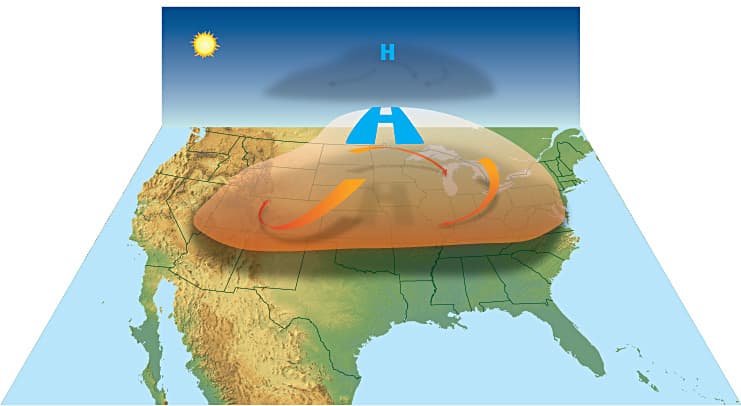
When should you use HeatRisk or WBGT instead of heat index tomorrow?
Use heat index when you want the fastest answer for general-public planning. Use HeatRisk when tomorrow's concern is not just how hot will it feel at 4 PM, but whether the broader event is unusually dangerous for your location, season, and health profile. HeatRisk looks at intensity and duration, including overnight temperatures, and it was expanded across the contiguous United States in 2024. That makes it especially useful when tomorrow is part of a multi-day stretch with poor nighttime recovery or when you are planning for older adults, medically vulnerable people, or neighborhoods with limited cooling access.
WBGT becomes the better tool when outdoor exertion is high. Sports programs, military drills, landscaping crews, roofers, and anyone working in full sun need a metric that better reflects radiation load and work intensity. The Weather Prediction Center notes that WBGT is harder to predict precisely beyond the next day or two because it depends on several local-scale factors, but that limitation does not reduce its value when the task is deciding whether tomorrow's practice, shift, or tournament format is safe.
In practical terms, use all three tools in layers. Heat index screens the schedule. HeatRisk tells you whether the bigger event is becoming abnormal or more medically meaningful. WBGT governs the most exposed, most physical activity. That layered model is stronger than relying on one number to do everything.
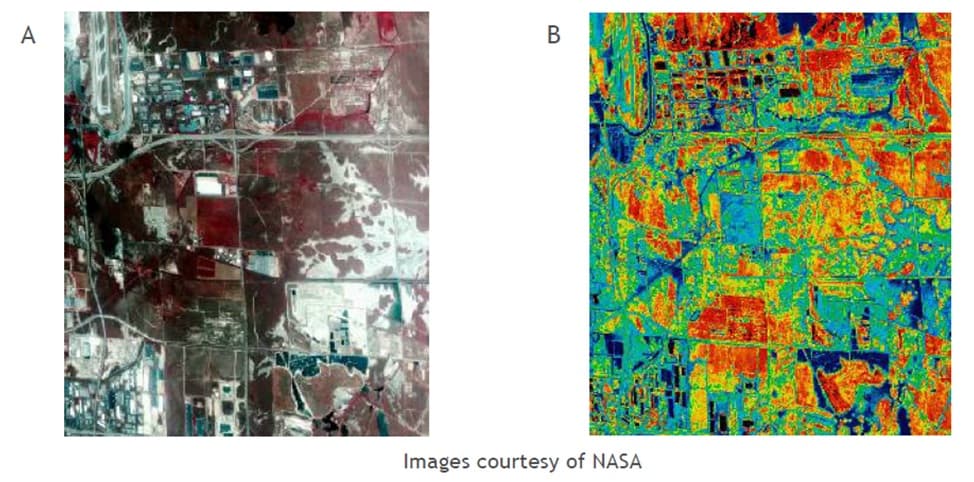
What should you change at 90, 100, 105, and 110+ heat index tomorrow?
The easiest way to use tomorrow's forecast is to attach a default action to each threshold. That prevents the common failure mode where people know the day is dangerous but still improvise in the moment. Improvisation is weak under heat stress. Pre-committed rules are stronger because they remove decision friction and make the day easier for families, teams, and work crews to coordinate.
The right thresholds will vary by acclimatization, fitness, age, medication use, overnight recovery, and whether the task happens in shade or full sun. Still, a threshold table is far more useful than vague reminders to drink water and take breaks. It gives you concrete trigger points for changing the schedule before discomfort turns into impairment.
| Heat index | Decision headline | Hydration / cooling move | Exposure-duration move |
|---|---|---|---|
| 90 | Begin modifying the schedule | Hydrate before leaving home and keep backup water visible, not buried in a bag or trunk. | Shorten the hottest outdoor block instead of assuming you can push through it. |
| 100 | Treat midday as a managed-risk period | Add electrolyte support for long sessions and check for early heat-exhaustion symptoms. | Move flexible activity before noon or after sunset whenever possible. |
| 105 | Use a protective operating plan, not informal judgment | Stage cold fluids, cooling towels, and vehicle or indoor recovery breaks in advance. | Postpone hard effort, reduce pace, and require shade breaks by schedule rather than feel. |
| 110+ | Assume fast escalation is possible | Hydration alone is no longer enough; combine cooling, reduced exposure, and monitoring. | Cancel or relocate nonessential strenuous outdoor plans in the hottest window. |
What should a nightly heat planning workflow look like?
1. Check the hourly heat index first
Find the peak window before you look at anything else. That creates the frame for the rest of tomorrow's decisions.
2. Cross-check heat with other outdoor stressors
Review air quality tomorrow by ZIP code and UV index tomorrow by ZIP code when tomorrow involves long time outdoors. A heat plan is stronger when breathing strain and sun load are accounted for at the same time.
3. Lock immovable commitments
Commute times, appointments, and shifts are your fixed points. Once those are in place, move flexible tasks around them instead of trying to tough it out during the worst heat block.
4. Stage cooling logistics before bed
Fill bottles, charge fans or cooling devices, prep shaded wait spots, and put sun-protective gear where it will not be forgotten in the morning rush.
5. Run a one-minute after-action review tomorrow night
Ask which hour felt worse than forecast, which route lacked shade, and which task should move next time. Two weeks of tiny adjustments create a much stronger personal heat protocol than generic advice alone.
FAQ: heat index tomorrow by zip code
How do I check heat index tomorrow by zip code?
Start with the hourly forecast for your ZIP code, then compare the highest apparent temperature window with your fixed outdoor plans. That works better than checking one peak number because risk depends on timing, humidity, and how long you stay outside.
Is heat index the same as feels like temperature tomorrow?
Not exactly. Heat index is one major part of "feels like" language during hot weather, but apps may also blend wind, sun exposure, or other presentation logic into what they show to users.
What time is heat index highest tomorrow?
In many locations, the highest heat index occurs from mid-afternoon into early evening, often after air temperature peaks because humidity can stay elevated. Storm timing, cloud cover, and overnight moisture can shift that window by several hours.
How much hotter can direct sun feel than the forecast heat index?
The National Weather Service notes that heat index values were devised for shady, light-wind conditions, and that full sunshine can increase them by up to 15 degrees Fahrenheit. That is why a manageable forecast can still feel punishing on turf, pavement, rooftops, and sideline seating.
When should you use WBGT instead of heat index?
Use WBGT when sports, military training, or heavy outdoor work involve direct sun, radiant heat, protective gear, or high exertion. Use HeatRisk when you need a broader public-health view that accounts for unusual heat, duration, and overnight relief.
Authoritative references
For official heat-index interpretation and protection guidance, review the National Weather Service heat-index chart, OSHA heat guidance, with the OSHA-NIOSH Heat Safety Tool app, CDC extreme heat protection guidance, and NWS HeatRisk.