
Heat Alerts
Heat advisory vs extreme heat warning: when dangerous heat becomes a stay-inside day
A heat advisory means dangerous heat is expected and you should actively reduce exposure, while an extreme heat warning means the heat is exceptionally dangerous and normal outdoor routines can become medically risky fast. The National Weather Service adopted the plain-language term extreme heat warning in March 2025 so the higher alert tier would communicate urgency more clearly than the older phrase excessive heat warning.
Heat advisory vs extreme heat warning is really a question about how much danger the forecast office expects, how long the heat will last, and how aggressively you should change tomorrow's plans. If you already use this site's heat index tomorrow by ZIP code page, heat index vs HeatRisk comparison, and best time to be outside tomorrow, this guide explains how the alert label changes the decision: when you can still adapt with shade, water, and a lighter schedule, and when the safer move is to cancel exertion, find reliable cooling, and treat the day like a real health hazard instead of just "typical summer heat."

What is the difference between a heat advisory and an extreme heat warning?
Dangerous vs exceptionally dangerous| Alert | Meaning | Urgency | What you do |
|---|---|---|---|
| Heat Advisory | Dangerous heat is expected or already occurring. | High, but often still manageable if you change the schedule early. | Reduce peak heat exposure, hydrate, use cooling, and limit strenuous outdoor activity. |
| Extreme Heat Warning | Exceptionally dangerous heat is expected or already occurring. | Higher risk of rapid heat illness, especially for vulnerable groups and anyone working outside. | Treat cooling access as essential, cancel or sharply modify outdoor activity, and watch for symptoms aggressively. |
National Weather Service heat alerts are built to answer a practical question first: how much routine heat exposure is still acceptable tomorrow, and when does that answer become "not much at all"?
Why does some coverage still say excessive heat warning?
Because the wording changed recently, and the old name is still in circulation. On March 4, 2025, the National Weather Service simplified the heat-alert suite by renaming Excessive Heat Warning to Extreme Heat Warning and Excessive Heat Watch to Extreme Heat Watch. The goal was clarity. "Extreme heat warning" tells the public more directly that the danger comes from heat itself, while "excessive" required extra interpretation and was easier to dismiss as routine weather language.
Many people still use the old phrase, especially when they remember older TV graphics, municipal press releases, or phone screenshots. The forecast problem did not change. The higher heat-alert tier still marks a period when high heat index values, prolonged exposure, repeated hot afternoons, or very warm nights can push more people into heat illness quickly. What changed is the label used in current National Weather Service products.
What temperatures usually trigger a heat advisory or extreme heat warning?
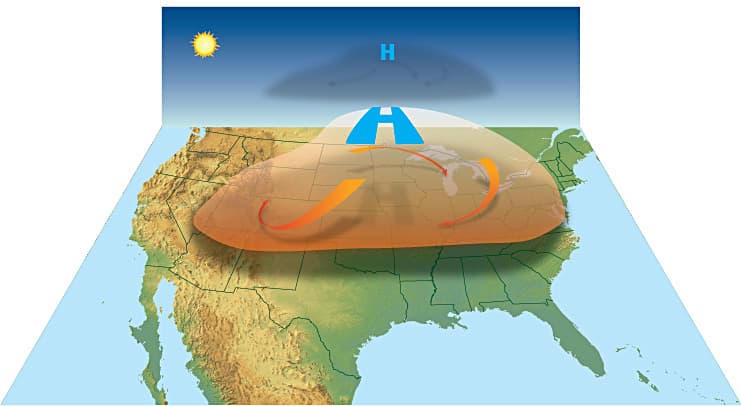
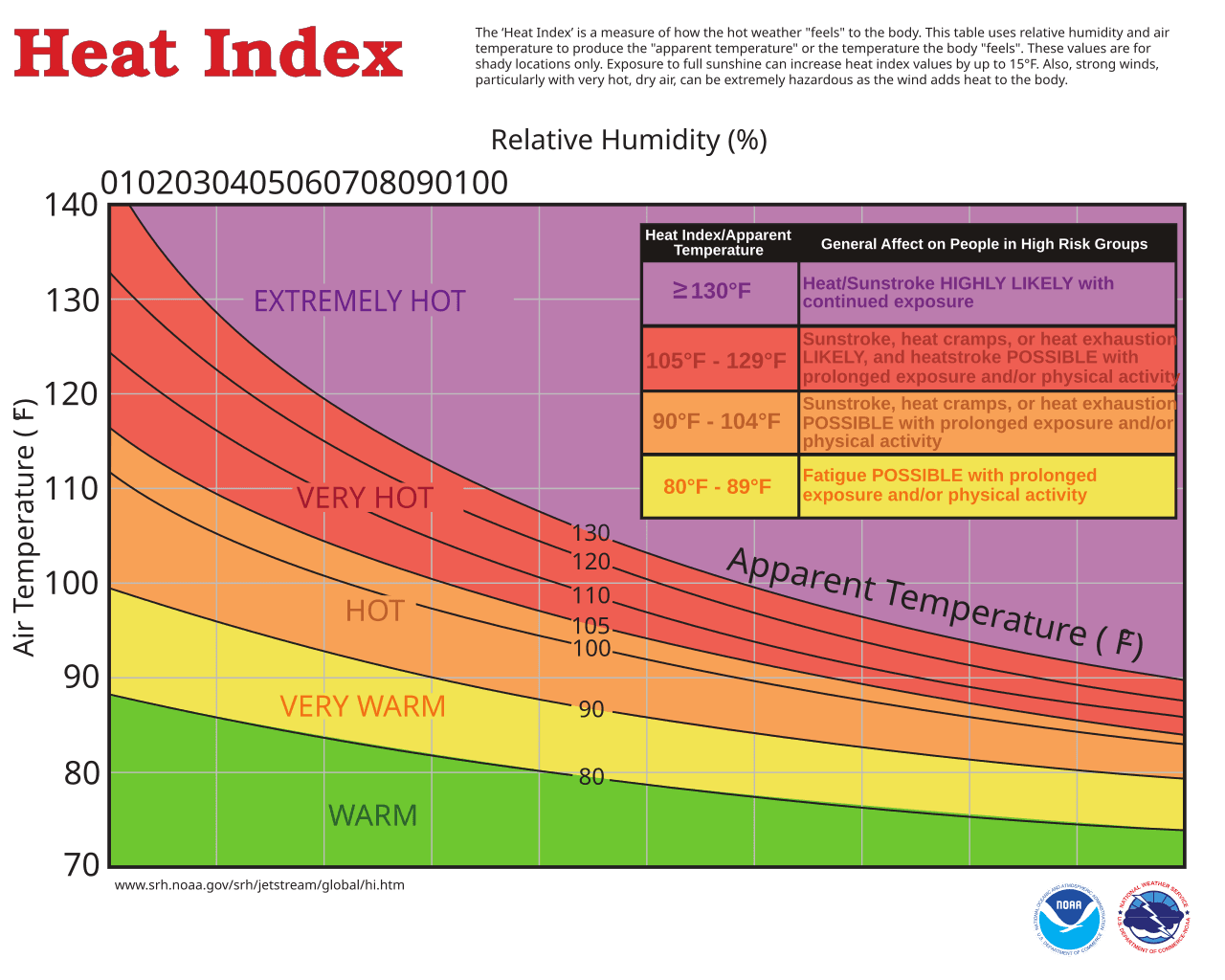
There is no universal heat advisory temperature or extreme heat warning temperature that applies to every ZIP code in the United States. Many forecast offices still use heat index thresholds that roughly align with advice you have probably seen before: around 100 to 109 F can support advisory-level messaging, while 110 F and above often supports the higher warning tier. But those numbers are only the starting point. Forecast offices also look at duration, overnight lows, time of year, local climate, and how quickly the heat will affect people who are not well acclimatized.
That local flexibility is important. A 103 F heat index in a place that rarely sees early-season heat can be more disruptive than the same number in a climate that routinely prepares for it. Likewise, a metro area where nighttime temperatures stay above the mid-70s can see risk build faster because the body gets fewer hours to recover. This is one reason the site's HeatRisk levels guide matters alongside classic alert terms: local impact is about more than a single afternoon peak.
Treat published thresholds as operational cues, not trivia. If tomorrow's heat index reaches the low 100s but the local office has issued only a heat advisory, the body stress is still real. If the forecast jumps into the higher tier and carries an extreme heat warning, the more useful question is not "how many degrees higher is this?" but "which routine activities are now bad decisions?"
Why local heat criteria vary so much
Same hazard, different thresholds| Decision factor | Heat advisory pattern | Extreme heat warning pattern |
|---|---|---|
| Heat index | Often around 100 to 109 F in many offices | Often 110 F or higher in many offices |
| Duration | One or more dangerously hot afternoons | Longer stretches or combined daytime and nighttime stress |
| Overnight lows | Warm nights raise risk, but may not drive the headline alone | Very warm nights can help push an event into the higher tier because the body cannot cool well |
| Local climate | Criteria can be lower in cooler climates or early-season events | Criteria can shift with local acclimatization, health impacts, and office policy |
| Forecast tools | Local offices may blend heat index with local experience | Some offices also lean on HeatRisk or locally tailored impact thresholds |
The practical implication is that you should read both the alert headline and the local forecast discussion of conditions. A county in Arizona, Minnesota, and coastal North Carolina may all face dangerous heat tomorrow, but the exact combination of humidity, nighttime recovery, and acclimatization makes the threshold math look different in each place.
That is why checking the local tomorrow-by-hour curve is so useful. Use the site's weather tomorrow by hour page to see when the heat becomes oppressive, when shade stops helping much, and whether the uncomfortable period is two hours long or effectively the entire afternoon plus evening commute.
What should you do during a heat advisory?
A heat advisory is the moment to change the schedule before the day gets away from you. That usually means front-loading errands into the morning, moving a run or practice into an earlier window, wearing lighter clothing, and deciding where the coolest indoor fallback is if the house or car starts feeling worse than the forecast suggested. The site's what to wear tomorrow guide helps with the comfort side, but the alert tells you the day is no longer just about comfort.
Hydration advice sounds obvious, but the advisory stage is when it actually works. Drink before you feel wiped out, not after. Reduce the amount of direct sun you volunteer for between late morning and early evening. If you care for older adults, infants, or people who do not have dependable air conditioning, this is when you start checking in rather than waiting until the warning tier arrives. Extreme heat kills more people in the United States than most weather hazards precisely because routine decisions can look harmless until the cumulative stress shows up in the body.
A heat advisory is also the right time to stop pretending a workout or job task will be "fine because it is only an hour." Many heat illnesses develop during ordinary activity when people underestimate humidity, hot pavement, sun exposure, or how little overnight recovery they had. Advisory-level heat is your cue to downshift, add breaks, and move effort out of the worst window if you can.
What should you do during an extreme heat warning?
An extreme heat warning is when cooling stops being a nice-to-have and becomes the main task of the day. If you have air conditioning, this is the day to use it early enough that the home never gets far behind the outside conditions. If you do not have reliable cooling, the plan should shift toward libraries, malls, community centers, friends, or any legitimate cooling space you can reach safely. Waiting until the house is already dangerous makes the logistics harder and the physical recovery slower.
The warning tier should also change how you think about exertion. Hard yard work, afternoon running, sports practices, outdoor waiting lines, and poorly ventilated jobs move into a much riskier category. Even if you are acclimatized, warning-level heat can stack dehydration, sun exposure, and hot-surface load faster than many people realize. If tomorrow is a warning day, the safer plan is often to cancel, shorten, move indoors, or split the task across cooler hours rather than just promising to "take more water."
Warning-level heat also exposes the weakness of warm nights. When the overnight low stays elevated, the body never fully resets. Sleep quality drops, cumulative fatigue rises, and people start the second or third hot day with less margin. That is why a multi-day warning can feel much more dangerous than a one-day spike that has a cooler night on either side. If the alert text mentions poor overnight recovery, treat that as a serious risk multiplier, not a minor detail.
Who is most at risk when heat alerts go up?
The obvious risk groups still matter: older adults, infants and young children, people with chronic medical conditions, pregnant people, outdoor workers, athletes, and anyone without consistent cooling. But the more useful rule is that heat hurts fastest when exposure is unavoidable, recovery is incomplete, or the person cannot easily recognize symptoms and respond. That is why warehouse work, delivery routes, sports camps, second-floor apartments without air conditioning, and even long outdoor commutes can become warning-day problems.
Medication and housing conditions matter too. Some medicines affect hydration or temperature regulation. Small apartments with poor insulation can stay hot deep into the night. Cars become heat traps within minutes. If you are making plans for tomorrow rather than just reading the forecast academically, the right question is not "am I generally healthy?" but "how easy will it be for me to stay cool for the full alert window?"
This is where the site's weather tools help people make less abstract decisions. A high heat index plus a poor outdoor window, warning-level overnight lows, and no reasonable indoor cooling path is a stronger decision signal than any single number on its own. Heat alerts are most valuable when they push you to look at the whole exposure picture, not just the noon temperature.
Heat emergencies often look ordinary at first. People get into trouble because the day still feels familiar right up until the body stops coping well.
How do you spot heat illness early enough to act?
Symptoms escalate fast| Condition | Common signs | Immediate response |
|---|---|---|
| Heat cramps | Painful muscle cramps, heavy sweating, thirst | Stop activity, move to a cooler place, sip water, and do not push through the cramps. |
| Heat exhaustion | Weakness, dizziness, nausea, headache, clammy skin, fast pulse | Move to air conditioning or shade, loosen clothing, cool the body, and seek medical care if symptoms worsen or do not improve. |
| Heat stroke | Confusion, collapse, seizure, very high body temperature, loss of consciousness | Call 911 immediately. Heat stroke is a medical emergency and cooling should begin while help is on the way. |
Heat illness is one of the main reasons warning-level heat deserves respect even when it is not visually dramatic. Cramping and dizziness can still look manageable, which tempts people to finish the task anyway. That is the wrong instinct. OSHA and CDC guidance both emphasize moving people to a cooler place and acting earlier rather than later, especially if symptoms involve nausea, confusion, fainting, or behavior changes.
If someone shows heat-stroke symptoms such as confusion, collapse, seizure, or loss of consciousness, treat it as an emergency and call 911. The reason heat alerts matter is not only that tomorrow may feel miserable; it is that a forecast setup can create the exact conditions where ordinary exposure becomes medical emergency territory much faster than people expect.
How do HeatRisk, heat index, and the hourly forecast fit with the alert?
The alert headline tells you the seriousness tier. Heat index tells you how hot the air feels once humidity is factored in. HeatRisk adds a broader picture of cumulative health impact, especially across multiple days and nights. Your hourly forecast tells you exactly when the stress window opens and closes in your location. Those are four different jobs, and you make better decisions when you let each tool do its job instead of expecting one number to do everything.
For example, a heat advisory tomorrow may still pair with only a modest morning risk, a brutal 3 PM to 7 PM outdoor window, and a surprisingly warm midnight temperature that makes sleep recovery weaker. A warning day may show the same pattern but at a higher severity, or it may signal a multi-day accumulation problem even if one individual hour does not look wildly different from the previous afternoon. That is why the best workflow is to start with the alert, then look at the details using the site's heat index by ZIP code and hour-by-hour forecast.
If you need a faster personal rule, use this one: when the alert is heat advisory, shrink the hardest part of the day; when the alert is extreme heat warning, assume the day needs a cooling plan, not just a hydration plan. That shift sounds small, but it changes how you schedule work, travel, exercise, childcare, and even what room of the house feels safe by late afternoon.
What should outdoor workers, coaches, and event planners change first?
The first change is not usually water alone. It is the schedule. Move labor, drills, setup work, and long outdoor queues away from the hottest hours if you can. Add shaded breaks and shorter work-rest cycles before people start struggling. Make sure there is a credible cooling fallback, not just a folding chair in the sun next to a sports drink cooler. Advisory-level heat is where a disciplined schedule still solves a lot of the problem. Warning-level heat is where schedule changes may still not be enough without a cooled indoor option.
For managers and coaches, the key is to build a decision threshold before tomorrow arrives. If the alert is warning-level, are you shortening practice, moving indoors, or canceling? If the overnight low stayed hot, are you assuming athletes and workers are already carrying fatigue into the day? Ambiguity wastes the best decision time. The site's best time outside page can help with timing, but the alert tier should determine how conservative you get.
Bottom line for tomorrow's forecast
Heat advisory vs extreme heat warning is not just a wording upgrade. It is a decision upgrade. A heat advisory means tomorrow's heat is dangerous enough that you should cut exposure early, especially in the afternoon. An extreme heat warning means the safer plan is to center the day around cooling, shorter or canceled exertion, and faster response to heat illness symptoms.
If you only remember one rule, remember this: advisory means adjust the routine before it becomes a problem; warning means assume the routine itself is the problem until you redesign it around cooler hours and cooler spaces.
Heat Advisory vs Extreme Heat Warning FAQ
What is the difference between a heat advisory and an extreme heat warning?
What temperature triggers a heat advisory or extreme heat warning?
Why do some sites still say excessive heat warning?
What should you do during a heat advisory?
Does an extreme heat warning mean you should stay inside?
Authoritative references
For official heat-alert wording and safety guidance, review the National Weather Service 2025 heat-hazard terminology update, NWS heat watch, advisory, and warning safety guidance, NOAA HeatRisk, CDC extreme heat health effects, and OSHA heat illness first aid.